


Bill Landry
Understanding Vagus Nerve Stimulation (VNS) — A Calming Path to Wellness
- , Articles
Understanding Vagus Nerve Stimulation (VNS) — A Calming Path to Wellness
In recent years, vagus nerve stimulation (VNS) has gained attention in both neuroscience and wellness communities for its potential to reduce stress, improve mood, and support the body’s natural recovery systems. Once available only through surgically implanted devices, VNS can now be performed non-invasively using gentle electrical stimulation through the ear — known as transcutaneous vagus nerve stimulation (tVNS).
What Is the Vagus Nerve?
The vagus nerve is the longest cranial nerve in the body. It connects the brainstem to many major organs, including the heart, lungs, and digestive system. As part of the parasympathetic nervous system, it plays a vital role in regulating the body’s “rest-and-digest” response — lowering heart rate, calming breathing, and promoting relaxation.
How Does Vagus Nerve Stimulation Work?
By applying mild electrical pulses to specific areas of the ear (especially the tragus or cymba concha), tVNS activates sensory branches of the vagus nerve. These signals travel to the brainstem and influence areas that regulate mood, inflammation, and autonomic balance.
Benefits of Non-Invasive VNS
- Supports relaxation and stress management
- May reduce symptoms of anxiety and depression
- Promotes recovery after injury or illness
- Helps balance autonomic (sympathetic/parasympathetic) activity
- Improves heart rate variability (HRV) and breathing patterns
How to Perform Auricular Vagus Nerve Stimulation
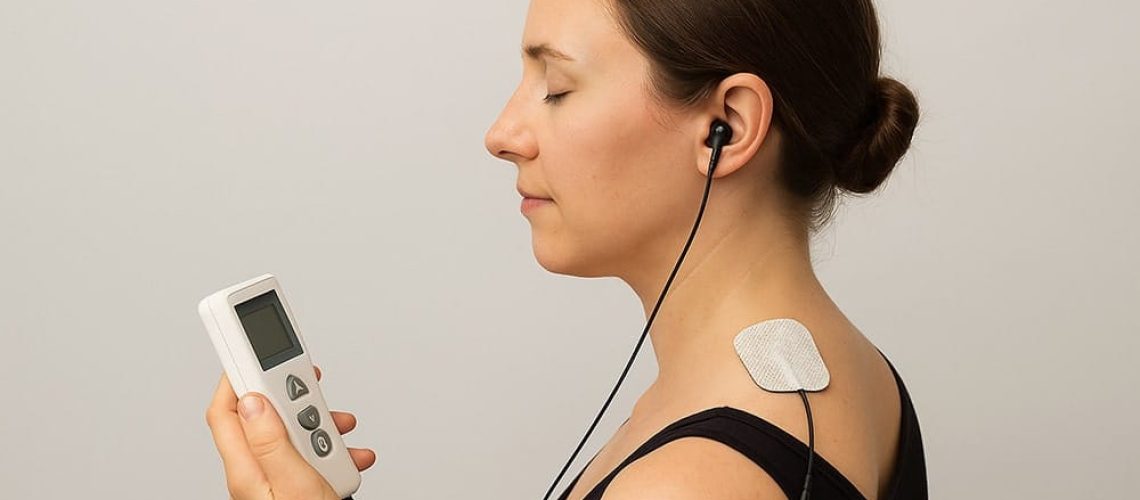
- Connect ear-clip electrodes to a compatible TENS unit with 2 mm pin connectors.
- Attach one clip to the tragus of the left ear (not the earlobe).
- Place a standard electrode pad on the left upper trapezius.
- Set the TENS to approximately 200 µs pulse width and 25 Hz frequency.
- Increase intensity until you feel a light tingling — never painful.
- Relax for 10–20 minutes while practicing slow, diaphragmatic breathing.
Clinical Research
Studies published in journals such as Frontiers in Neuroscience and Brain Stimulation have shown that tVNS can influence regions of the brain involved in mood and autonomic regulation. Research is ongoing in areas such as migraine, tinnitus, chronic pain, and inflammation.
You can download two excellent scientific resources here:
- Critical Review of Transcutaneous Vagus Nerve Stimulation (Frontiers in Neuroscience, 2020)
- Overview of Vagus Nerve Stimulation with TENS — Clinical Guide
Products That Make It Easy
At The Physio Store, we offer the new Physio-Stim Ear-Clip Electrodes — a simple, affordable accessory designed for safe auricular vagus nerve stimulation when paired with a TENS unit. An example of a TENS unit that has been used with Vagus nerve stimulation is the InTENSity 7 TENS unit by Richmar. A simple TENS unit that is easy to use at a reasonable cost.
Pigtail-lead design • Compatible with most TENS units • Includes bilingual instruction sheet View Product
Key Takeaway
Vagus nerve stimulation is an exciting example of how science and self-care meet. Whether used for relaxation, recovery, or research, tVNS offers a safe, accessible way to support nervous system balance from the comfort of home.
Always use electrotherapy products as directed and consult a healthcare professional before starting any new treatment program.
Share this post
More To Explore
Understanding Vagus Nerve Stimulation (VNS) — A Calming Path to Wellness
Understanding Vagus Nerve Stimulation (VNS) — A Calming Path to Wellness In recent years, vagus nerve stimulation (VNS) has gained

Why POWERbreathe Is the Gold Standard for Inspiratory Muscle Training (IMT)
Why POWERbreathe Is the “Gold Standard” for Inspiratory Muscle Training (IMT) Lung health mirrors overall health as we age. A
Subscribe To Our Newsletter
Get updates and learn from Our Experts


 SUPPORT SMALL CANADIAN BUSINESS