

Fitterfirst Adjustable Slant Board – 12″ Calf, Achilles & Plantar Fascia Stretching
Original price was: $209.95.$199.95Current price is: $199.95.
In stock

Clinical Pricing Available!
The Physio Store is offering clinical pricing for all businesses / institutions in healthcare, healthcare professionals/students and fitness industry professionals.
We highly recommend you to sign up for our clinical pricing program, which will provide you with discounts on most of our products. We will also send out exclusive monthly specials, new ideas and new products on the market. Our company values the hard work and dedication of healthcare professionals and express gratitude by offering you special pricing and monthly deals.
Close
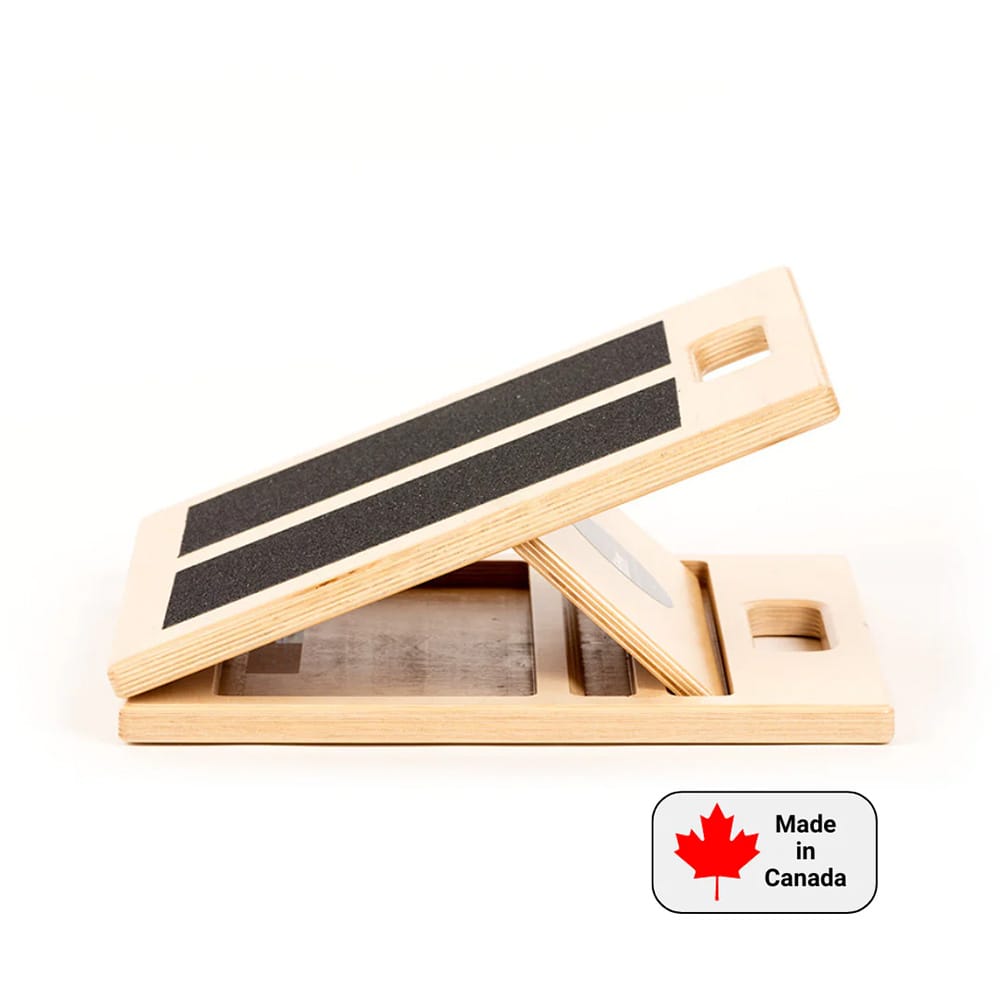
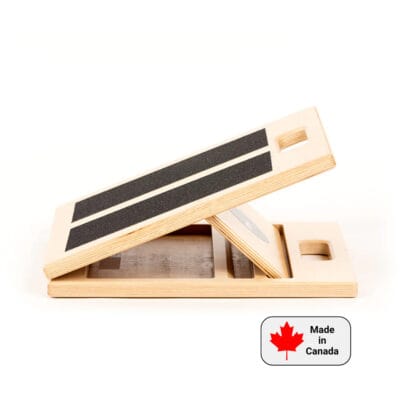
This Product Was Made In Canada!
Supporting locally made products is a great way to invest in quality craftsmanship while strengthening our communities.
Our selection of Canadian-made products spans multiple categories, including fitness, rehabilitation, pain relief, therapy, and recovery. These high-quality items are designed with innovation and care to support your health and well-being.
By choosing Canadian-made products, you’re not only ensuring top-tier performance but also contributing to local businesses, job creation, and sustainability.
We believe in promoting homegrown excellence, and we appreciate your support in keeping these industries thriving!
Close

Manufacturer Warranty
Manufacturer Warranty
The Fitterfirst Adjustable Slant Board is backed by a 1-year manufacturer warranty covering defects in materials and workmanship from the original date of purchase.
Fitterfirst products are designed for long-term use in physiotherapy clinics, gyms, and home rehabilitation programs. If a manufacturing issue occurs within the warranty period, the manufacturer will repair or replace the product at their discretion.
Proof of purchase may be required. Warranty coverage does not apply to misuse, modification, or accidental damage. Our team is always happy to assist with warranty questions or help coordinate support with the manufacturer if needed.
Return Policy
30-Day Return Window. Returns are accepted within 30 days of delivery for items that have been opened or tried on, provided they remain in resellable condition.
To qualify for a refund, items must be returned clean, complete, and in like-new condition with all original components, instructions, and product/identification labels intact. Please pack returns securely (ideally in a secondary shipping box) to prevent damage in transit.
Restocking fees may apply. If an item is returned used, damaged, missing packaging/instructions, or not in resellable condition, a restocking fee of up to 25% may be deducted from the refund.
International orders are final sale. Orders shipped outside of Canada are not eligible for return or exchange.
For full details and return instructions, please review our Return & Exchange Policy.

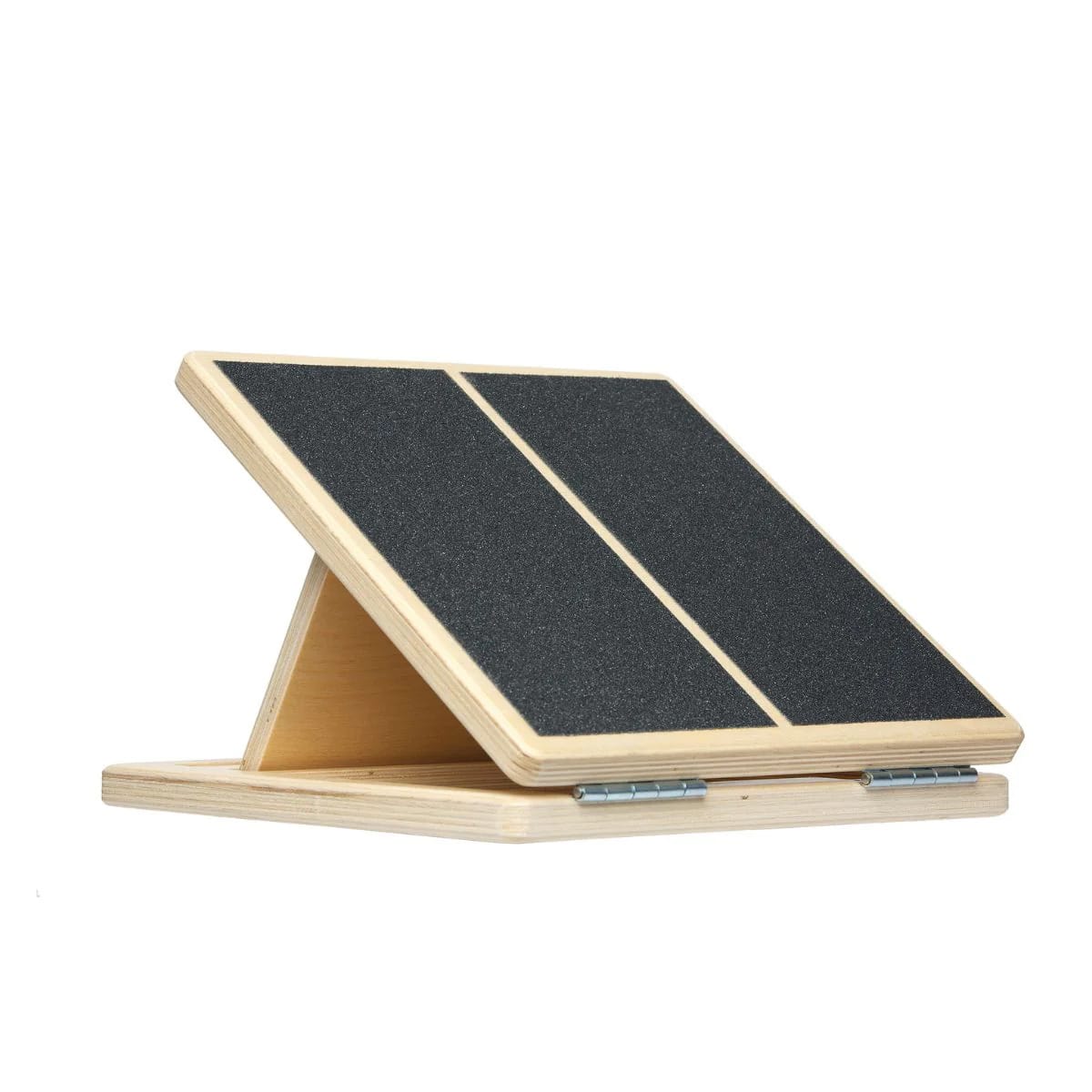
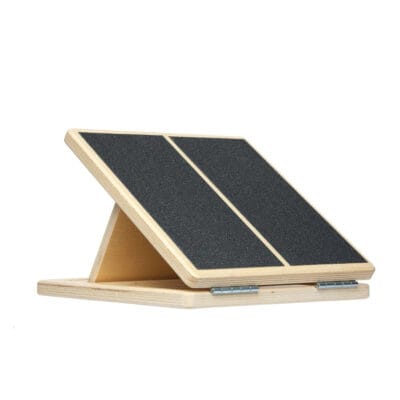
Fitterfirst Adjustable Slant Board – 12″
The Fitterfirst Adjustable Slant Board (12″) is a professional-grade calf stretch board designed to improve calf flexibility, ankle mobility, and Achilles tendon mobility. Slant boards are widely used in rehabilitation and stretching programs to target the plantar fascia, calf muscles, and Achilles tendon.
This high-quality board is trusted by healthcare professionals and is commonly used in physiotherapy clinics, chiropractic clinics, rehabilitation centers, and athletic training facilities. Its durable wooden construction provides a stable platform for safe, controlled stretching during both clinical treatment programs and home exercise routines.
The 12-inch version offers a compact and sturdy stretching surface that works well in both professional treatment settings and home rehabilitation programs. Adjustable incline angles allow users to progress from gentle rehabilitation stretches to deeper flexibility training as mobility improves.
Proudly Canadian
Fitterfirst products are proudly designed and manufactured in Canada and trusted by healthcare professionals across the country, including physiotherapy clinics, chiropractic clinics, rehabilitation centers, athletic training facilities, and home rehabilitation programs.
Why Use a Slant Board?
Slant boards help create a controlled incline that stretches the calf muscles, Achilles tendon, and plantar fascia. Regular stretching may improve ankle dorsiflexion, reduce calf tightness, and support recovery from plantar fasciitis, Achilles tendon irritation, and other lower leg conditions.
Key Features
- 12″ platform ideal for home and clinic use
- Adjustable incline angles for progressive stretching
- Targets calves, Achilles tendon, and plantar fascia
- Helps improve ankle dorsiflexion and flexibility
- Durable wooden construction
- Non-slip top surface for safe stretching
Common Conditions It May Help Support
- Plantar fasciitis
- Achilles tendon tightness
- Calf muscle tightness
- Shin splints
- Limited ankle dorsiflexion
- Post-injury rehabilitation
Who Uses Slant Boards?
Slant boards are commonly used by physiotherapists, chiropractors, athletic trainers, runners, and individuals performing home stretching routines to improve lower leg flexibility and ankle mobility.
Product Specifications
| Product | Fitterfirst Adjustable Slant Board |
|---|---|
| Size | 12 inch platform |
| Brand | Fitterfirst |
| Material | Wood construction |
| Adjustability | Multiple incline settings |
| Surface | Non-slip top surface |
| Use | Stretching, physiotherapy, rehabilitation |
How to Use a Slant Board for Calf Stretching
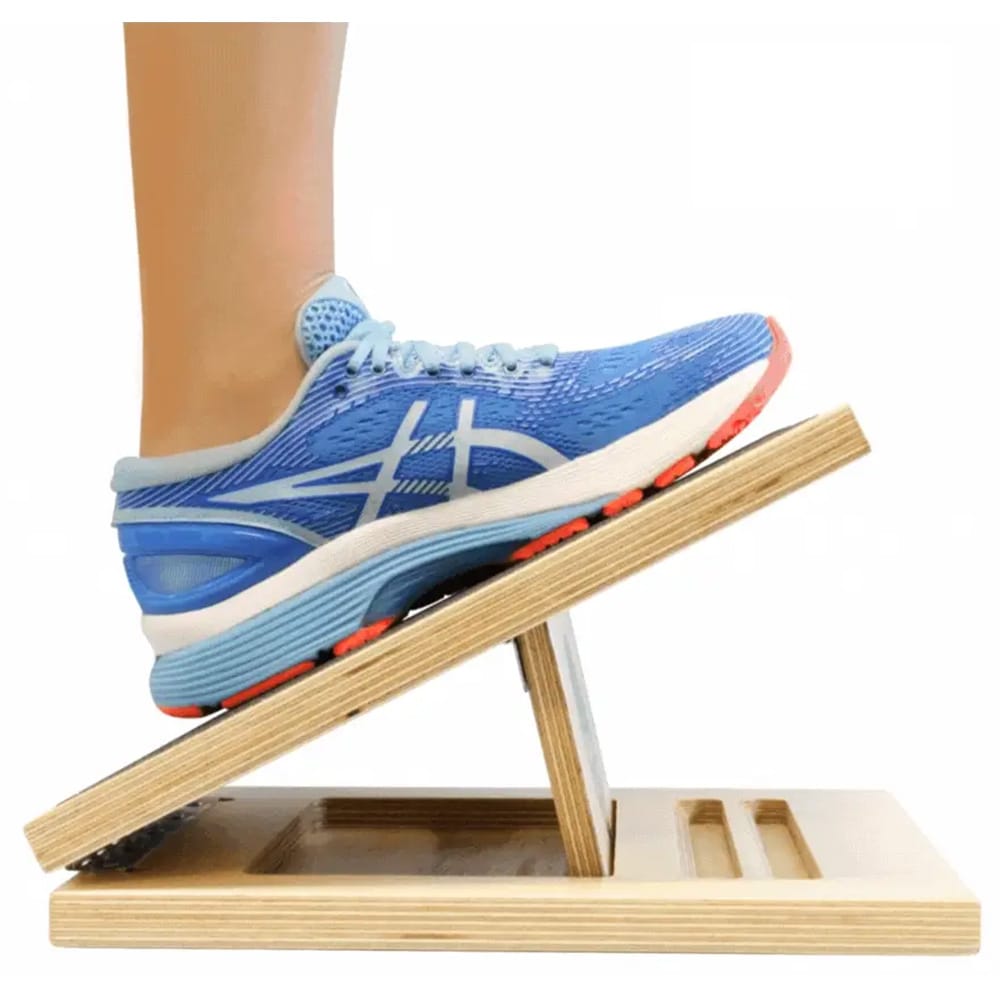
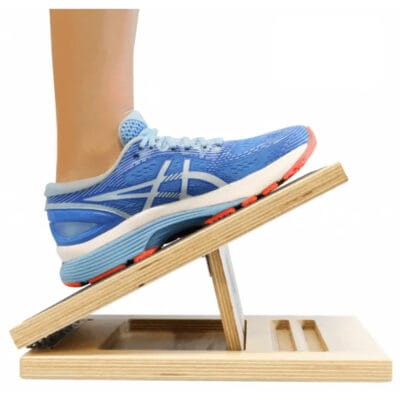
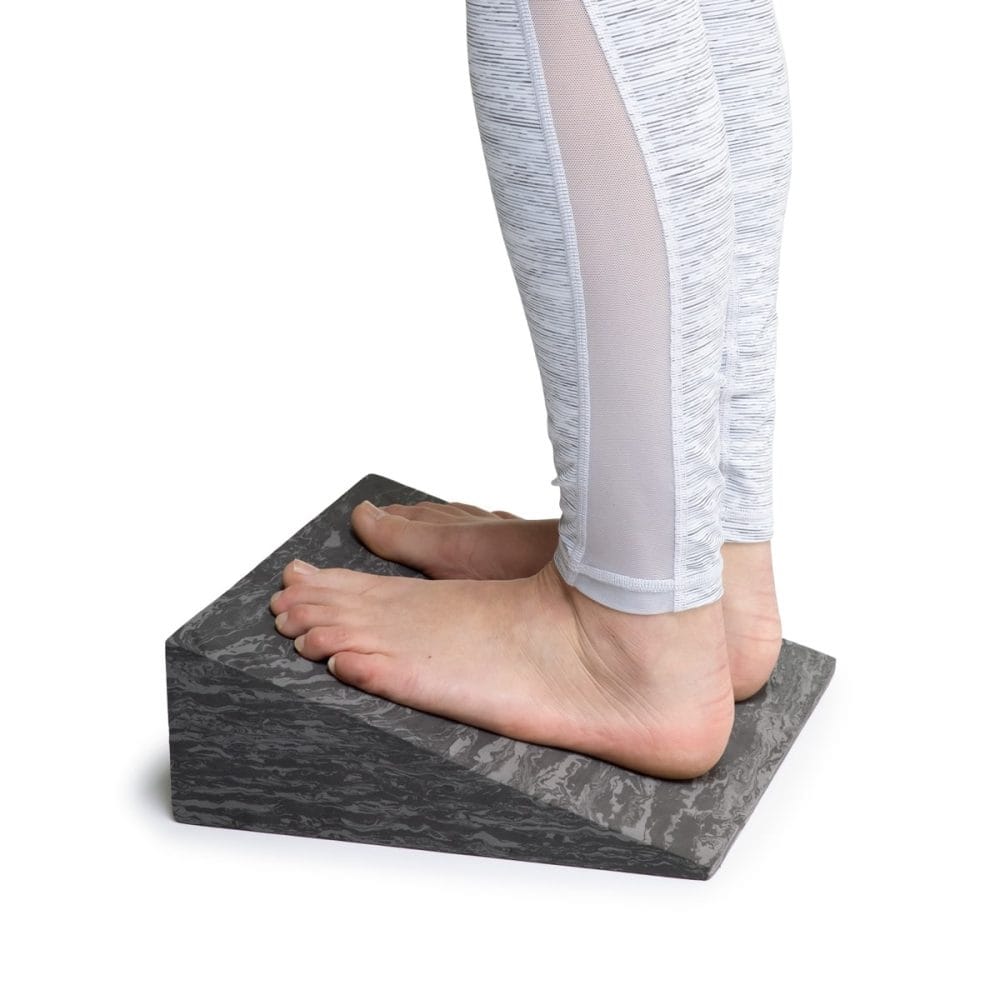
Place the slant board on a stable floor surface and stand with both feet on the board while keeping your heels down. Lean slightly forward while maintaining an upright posture until you feel a stretch in the calves and Achilles tendon.
Hold the stretch for approximately 20–30 seconds and repeat several times per session. Adjust the incline angle to control the stretch intensity.
Good to Know
Stretching should be performed gently without bouncing. If you are recovering from injury or surgery, consult a healthcare professional before beginning a new stretching routine.
Choosing Between the 12″ and 14″ Slant Board
Fitterfirst produces both 12-inch and 14-inch adjustable slant boards. The 12″ model is the most popular choice for home use and physiotherapy clinics because it provides a stable stretching platform while remaining compact and easy to store.
Why Choose the 12″ Slant Board?
- More compact for home use
- Easier to store
- Ideal for physiotherapy exercises
- Great for individual calf stretching
When the 14″ Slant Board May Be Preferred
- Provides a wider stance for larger users
- Popular in gyms and athletic training facilities
- Better for bilateral stretching with wider foot placement
Explore Products for Plantar Fasciitis & Achilles Injuries
If you are using a slant board to stretch your calves and Achilles tendon, you may also benefit from other rehabilitation tools designed to support recovery from plantar fasciitis, calf strains, and Achilles tendon injuries.
Shop Plantar Fasciitis & Heel Pain Solutions
Support Recovery from Calf Strains
Achilles Tendon Injury Rehabilitation
Videos
Slant Board Exercises for Calf, Achilles & Plantar Fascia Stretching
Slant boards are commonly used in physiotherapy programs to stretch the calf muscles, improve ankle mobility, and reduce strain on the plantar fascia and Achilles tendon.
Tip from Physiotherapists
Tight calf muscles are one of the most common contributors to plantar fasciitis and Achilles tendon pain. Regular calf stretching can improve ankle mobility and help reduce stress on the plantar fascia.
Why Tight Calves Can Cause Plantar Fasciitis & Achilles Pain
Tight calf muscles are one of the most common contributors to plantar fasciitis and Achilles tendon pain. The calf muscles connect to the Achilles tendon, which attaches to the heel bone and helps support the plantar fascia along the bottom of the foot.
When the calves are tight, they limit ankle dorsiflexion, which is the ability to bring your foot upward. This restriction increases tension through the Achilles tendon and plantar fascia during walking, running, and standing. Over time, this additional strain can contribute to heel pain and inflammation.
Stretching the calf muscles regularly helps reduce tension through the Achilles tendon and plantar fascia. Slant boards are commonly recommended by physiotherapists because they allow a controlled stretch of the gastrocnemius and soleus muscles while keeping the heel down.
Why Physiotherapists Recommend Slant Boards
Slant boards provide a consistent and adjustable incline that helps stretch the calves safely and effectively. Regular stretching may improve ankle mobility, reduce calf tightness, and support recovery from plantar fasciitis, Achilles tendon irritation, and other lower leg conditions.
Is a Slant Board Good for Plantar Fasciitis?
Yes. Slant boards are one of the most commonly recommended tools for stretching the calf muscles and plantar fascia. Tight calves are a major contributor to heel pain because they increase tension through the Achilles tendon and plantar fascia.
Using a slant board allows you to perform controlled calf stretches while keeping the heel down, which helps lengthen the gastrocnemius and soleus muscles. Improving calf flexibility may reduce strain on the plantar fascia and support recovery from plantar fasciitis.
Why the Fitterfirst Slant Board Is Popular for Heel Pain
- Adjustable incline for progressive stretching
- Stable platform for controlled calf stretches
- Used by physiotherapists and rehabilitation clinics
- Helps improve ankle mobility and calf flexibility
Use in Clinical Balance Testing (BESTest)
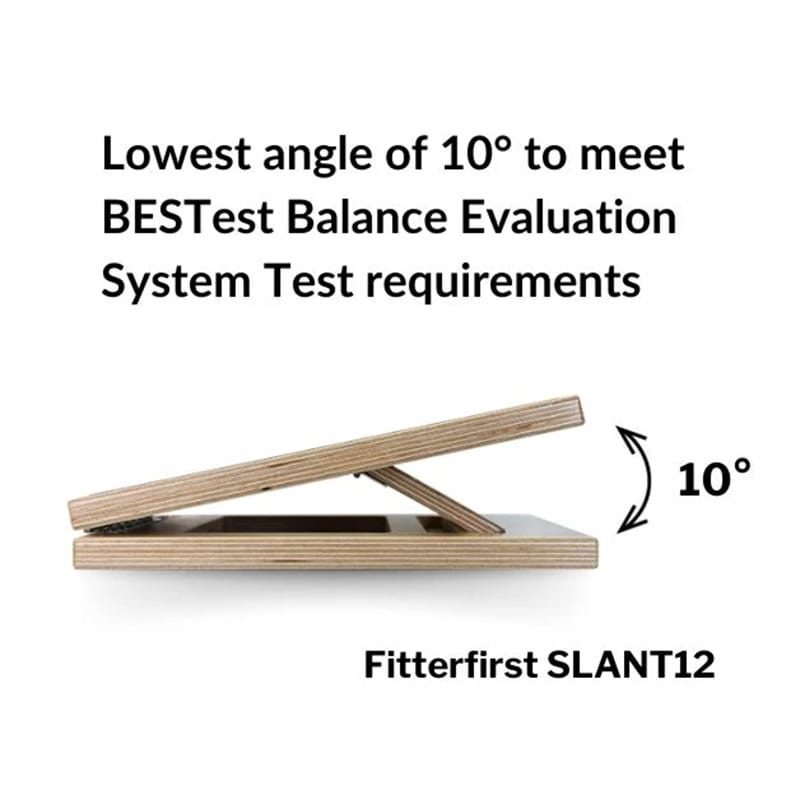
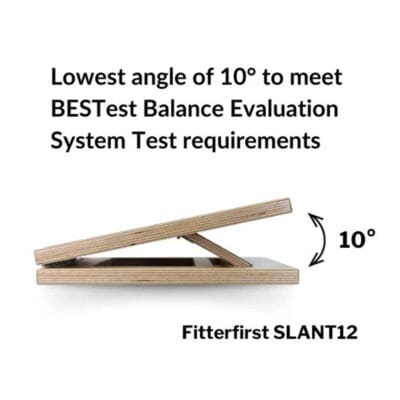
Slant boards are sometimes used in clinical balance and mobility testing. In certain balance assessment protocols, a small incline such as a 10° slant board may be used to challenge ankle stability and evaluate how a patient adapts to altered support surfaces.
One example is the BESTest (Balance Evaluation Systems Test), a clinical assessment developed to evaluate different systems involved in balance control. The test is commonly used in neurological rehabilitation, fall-risk assessment, and research settings.
During some balance testing protocols, clinicians may use an inclined surface to assess ankle strategy, postural control, and the patient’s ability to maintain balance when the base of support is altered.
About the BESTest
The BESTest (Balance Evaluation Systems Test) is a comprehensive clinical balance assessment designed to identify specific balance impairments. It evaluates multiple components of postural control including biomechanical constraints, stability limits, anticipatory adjustments, sensory orientation, and gait stability.
Healthcare professionals interested in the BESTest can review the original research and testing protocol here:
BESTest Balance Evaluation Systems Test – Official Information
Common Questions About Slant Board Stretching
Do slant boards really help plantar fasciitis?
Slant boards are commonly used in plantar fasciitis rehabilitation because they stretch tight calf muscles and the plantar fascia. Improving calf flexibility may help reduce tension through the heel and support recovery.
How often should you use a slant board?
Many physiotherapists recommend performing calf stretches on a slant board daily or several times per week. Holding each stretch for about 20–30 seconds and repeating several times is a common routine.
What muscles does a slant board stretch?
A slant board primarily stretches the gastrocnemius and soleus calf muscles while also lengthening the Achilles tendon and plantar fascia.
Are slant boards good for ankle mobility?
Yes. Regular use of a slant board may help improve ankle dorsiflexion by stretching tight calf muscles and increasing flexibility in the lower leg.
Frequently Asked Questions
What is the Fitterfirst Adjustable Slant Board 12" used for?
The Fitterfirst Adjustable Slant Board 12" is designed to stretch the calf muscles, Achilles tendon, and plantar fascia. It creates an angled surface that helps improve flexibility, ankle mobility, and lower leg comfort. Slant boards are widely used in physiotherapy clinics, athletic training programs, and home stretching routines.
Can a slant board help with plantar fasciitis?
Yes. Slant boards are commonly used in plantar fasciitis stretching programs because they help lengthen tight calf muscles and reduce strain on the plantar fascia. Regular calf stretching may help relieve heel pain and improve mobility over time.
Is the Fitterfirst slant board good for Achilles tendon stretching?
Yes. Standing on the incline of the slant board creates a controlled stretch that targets both the calf muscles and the Achilles tendon. Adjustable incline angles allow users to gradually increase stretch intensity as flexibility improves.
Why would someone choose a 12-inch slant board instead of a 14-inch one?
The 12-inch slant board is more compact and easier to store, making it ideal for home use and physiotherapy exercises. The larger 14-inch version provides a wider stance and is sometimes preferred in gym or athletic training environments.
Who typically uses a slant board for stretching?
Slant boards are commonly used by physiotherapists, chiropractors, athletic trainers, runners, and people performing home stretching routines to improve ankle mobility and calf flexibility.
What conditions may benefit from slant board stretching?
Slant board stretching is often used as part of rehabilitation programs for plantar fasciitis, Achilles tendon tightness, calf muscle tightness, shin splints, and limited ankle dorsiflexion.
How long should you stretch on a slant board?
Many physiotherapy programs recommend holding a calf stretch for about 20 to 30 seconds and repeating it several times per session. The exact routine may vary depending on your condition and the guidance of your healthcare professional.
Is the Fitterfirst Adjustable Slant Board made in Canada?
Yes. Fitterfirst is a Canadian company and their slant boards are known for durable construction and quality design used by rehabilitation professionals across Canada.
Can beginners safely use a slant board?
Yes. Beginners can start with a lower incline and shorter stretch times, gradually increasing the angle and duration as flexibility improves. Always stretch slowly and avoid bouncing.
Can a slant board improve ankle mobility and dorsiflexion?
Yes. Regular use of a slant board may help improve ankle dorsiflexion by stretching tight calf muscles and the Achilles tendon, which can contribute to restricted ankle movement.
What is the BESTest (Balance Evaluation Systems Test)?
The BESTest (Balance Evaluation Systems Test) is a clinical assessment used to evaluate different systems involved in balance control. It was developed to help healthcare professionals identify specific balance impairments related to posture, sensory orientation, stability limits, and gait. The test is commonly used in neurological rehabilitation, fall-risk assessment, and research settings.
Can a slant board be used during balance testing?
Yes. In some clinical and research settings, an inclined surface such as a slant board may be used to challenge ankle stability and postural control during balance assessments. Changing the angle of the support surface allows clinicians to observe how a patient adapts to altered foot positioning and ankle strategy.
Why might clinicians use a 10-degree incline during balance assessments?
A mild incline of approximately 10 degrees can challenge ankle dorsiflexion and postural control without being overly unstable. In certain assessment protocols or research settings, clinicians may use a small incline to evaluate how patients maintain balance when the support surface changes.
Is the BESTest commonly used in physiotherapy clinics?
The BESTest is most commonly used in neurological rehabilitation, vestibular therapy, and fall-risk assessment. While not every physiotherapy clinic uses the full BESTest protocol, many healthcare professionals are familiar with balance assessment methods that evaluate similar components of postural control.
| Weight | 2160 g |
|---|---|
| Dimensions | 31 × 31 × 5 cm |
| Country of Origin | Canada |
| HS Code | 9506.91.00.90 |
| Availability |
Now available in-store at 22635 Komoka Road Komoka N0L1R0 Powered With Oliver Pos |
|---|
What is the Fitterfirst Adjustable Slant Board 12" used for?
The Fitterfirst Adjustable Slant Board 12" is designed to stretch the calf muscles, Achilles tendon, and plantar fascia. It creates an angled surface that helps improve flexibility, ankle mobility, and lower leg comfort. Slant boards are widely used in physiotherapy clinics, athletic training programs, and home stretching routines.
Can a slant board help with plantar fasciitis?
Yes. Slant boards are commonly used in plantar fasciitis stretching programs because they help lengthen tight calf muscles and reduce strain on the plantar fascia. Regular calf stretching may help relieve heel pain and improve mobility over time.
Is the Fitterfirst slant board good for Achilles tendon stretching?
Yes. Standing on the incline of the slant board creates a controlled stretch that targets both the calf muscles and the Achilles tendon. Adjustable incline angles allow users to gradually increase stretch intensity as flexibility improves.
Why would someone choose a 12-inch slant board instead of a 14-inch one?
The 12-inch slant board is more compact and easier to store, making it ideal for home use and physiotherapy exercises. The larger 14-inch version provides a wider stance and is sometimes preferred in gym or athletic training environments.
Who typically uses a slant board for stretching?
Slant boards are commonly used by physiotherapists, chiropractors, athletic trainers, runners, and people performing home stretching routines to improve ankle mobility and calf flexibility.
What conditions may benefit from slant board stretching?
Slant board stretching is often used as part of rehabilitation programs for plantar fasciitis, Achilles tendon tightness, calf muscle tightness, shin splints, and limited ankle dorsiflexion.
How long should you stretch on a slant board?
Many physiotherapy programs recommend holding a calf stretch for about 20 to 30 seconds and repeating it several times per session. The exact routine may vary depending on your condition and the guidance of your healthcare professional.
Is the Fitterfirst Adjustable Slant Board made in Canada?
Yes. Fitterfirst is a Canadian company and their slant boards are known for durable construction and quality design used by rehabilitation professionals across Canada.
Can beginners safely use a slant board?
Yes. Beginners can start with a lower incline and shorter stretch times, gradually increasing the angle and duration as flexibility improves. Always stretch slowly and avoid bouncing.
Can a slant board improve ankle mobility and dorsiflexion?
Yes. Regular use of a slant board may help improve ankle dorsiflexion by stretching tight calf muscles and the Achilles tendon, which can contribute to restricted ankle movement.
What is the BESTest (Balance Evaluation Systems Test)?
The BESTest (Balance Evaluation Systems Test) is a clinical assessment used to evaluate different systems involved in balance control. It was developed to help healthcare professionals identify specific balance impairments related to posture, sensory orientation, stability limits, and gait. The test is commonly used in neurological rehabilitation, fall-risk assessment, and research settings.
Can a slant board be used during balance testing?
Yes. In some clinical and research settings, an inclined surface such as a slant board may be used to challenge ankle stability and postural control during balance assessments. Changing the angle of the support surface allows clinicians to observe how a patient adapts to altered foot positioning and ankle strategy.
Why might clinicians use a 10-degree incline during balance assessments?
A mild incline of approximately 10 degrees can challenge ankle dorsiflexion and postural control without being overly unstable. In certain assessment protocols or research settings, clinicians may use a small incline to evaluate how patients maintain balance when the support surface changes.
Is the BESTest commonly used in physiotherapy clinics?
The BESTest is most commonly used in neurological rehabilitation, vestibular therapy, and fall-risk assessment. While not every physiotherapy clinic uses the full BESTest protocol, many healthcare professionals are familiar with balance assessment methods that evaluate similar components of postural control.
You may also like…
Related products
Bauerfeind LordoLoc Lower Back Brace
In Stock
$267.00
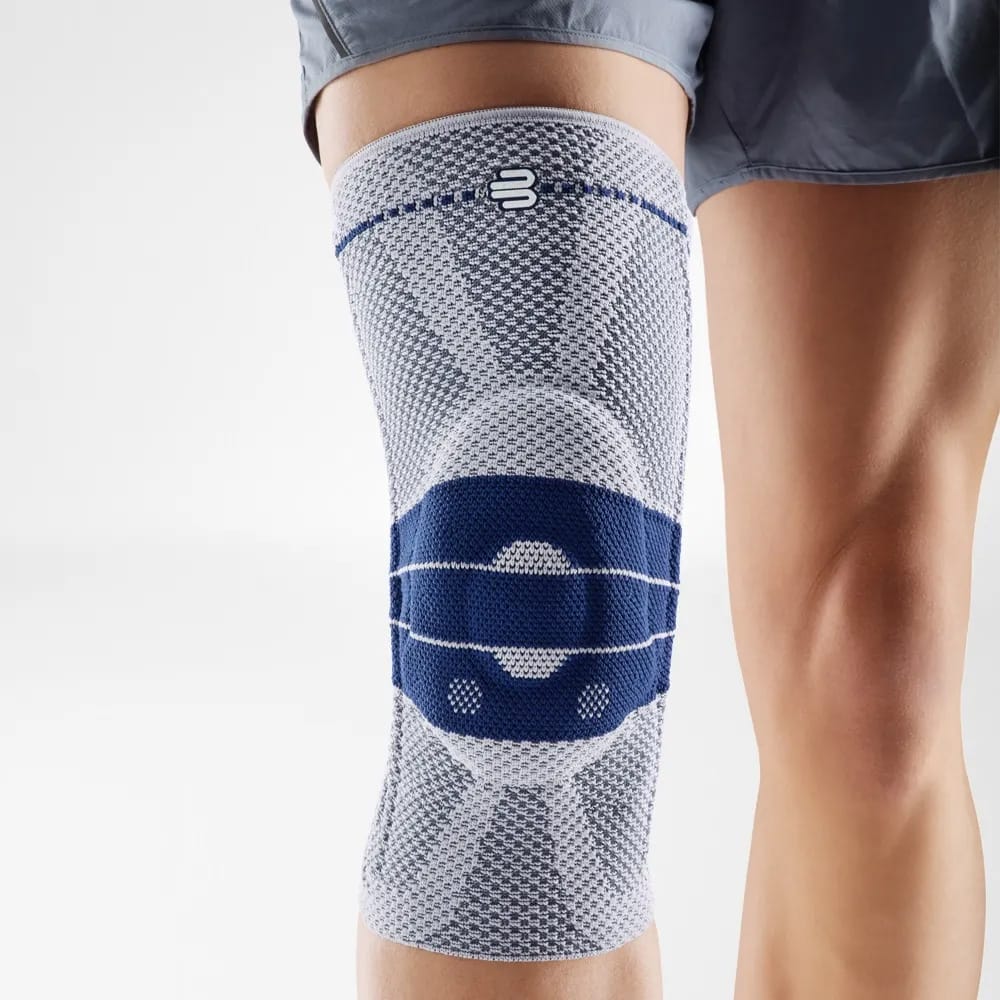
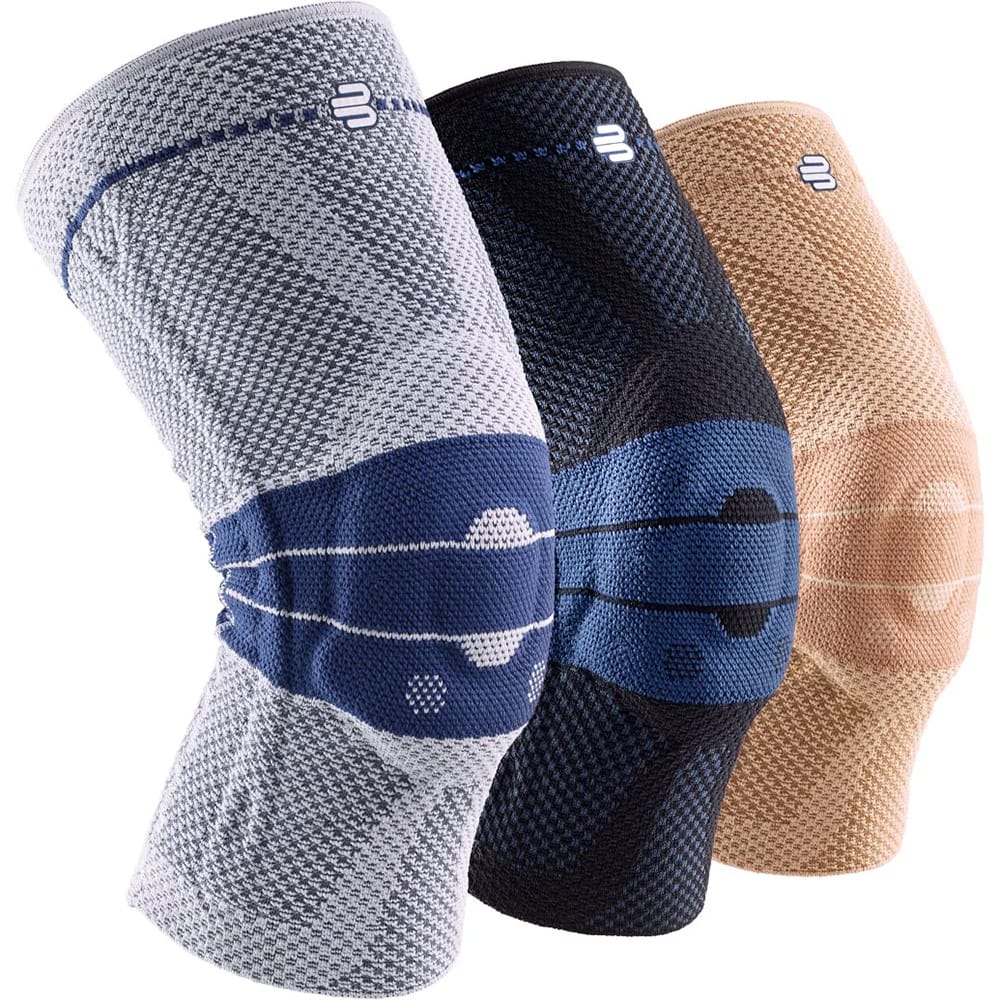
Bauerfeind GenuTrain Knee Brace (New Edition)
In Stock(2 Units)
$200.00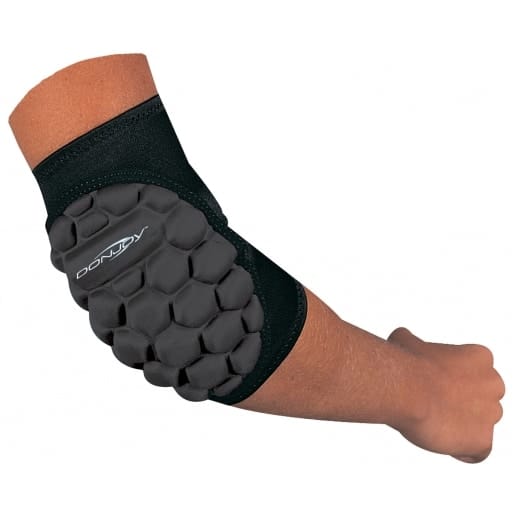
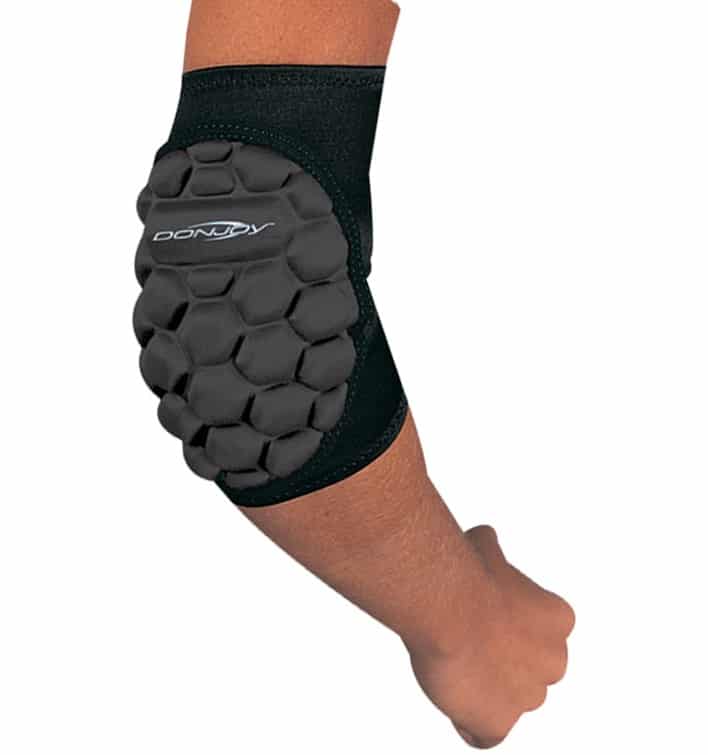
DonJoy Spider Elbow Pad
In Stock
$66.95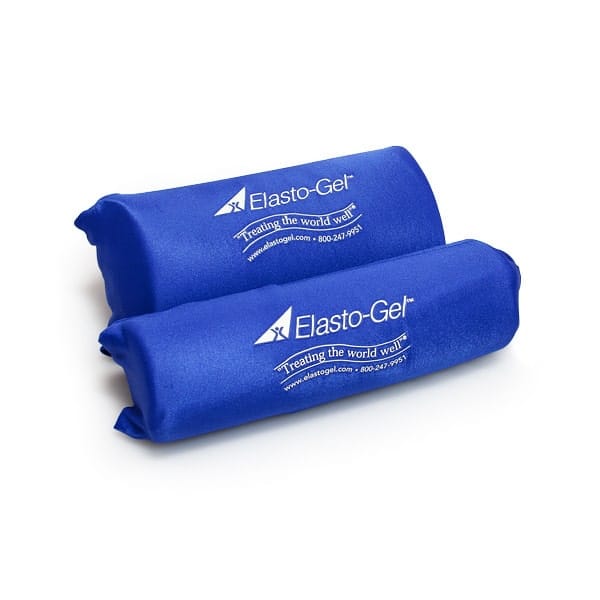
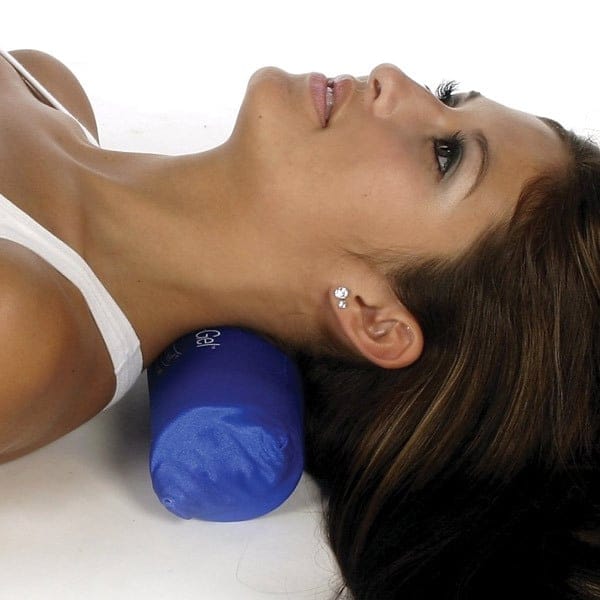
Elasto-Gel Neck/Back Support Roll
In Stock
Price range: $59.95 through $79.50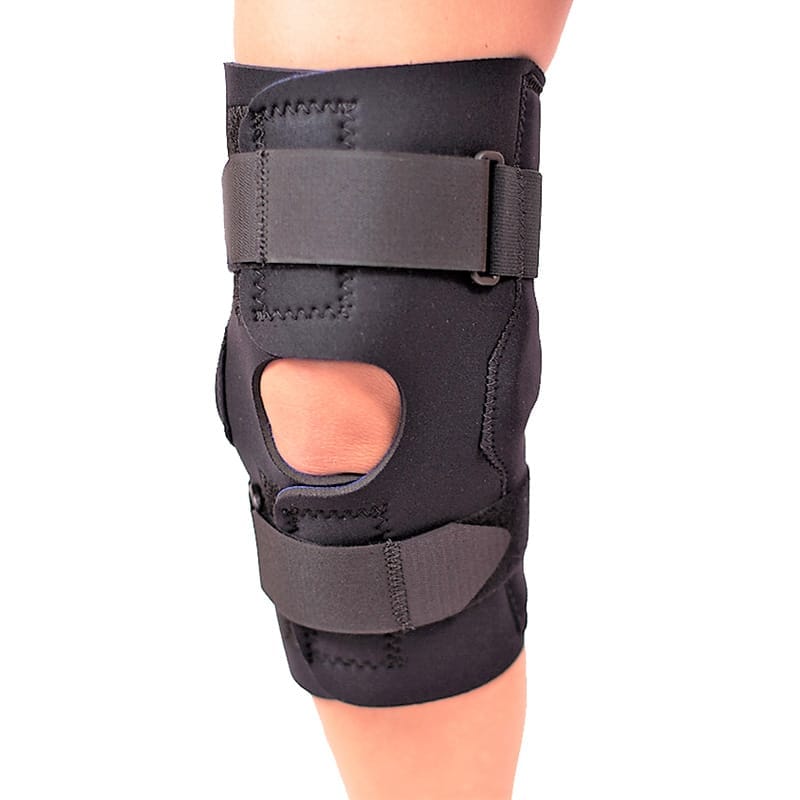
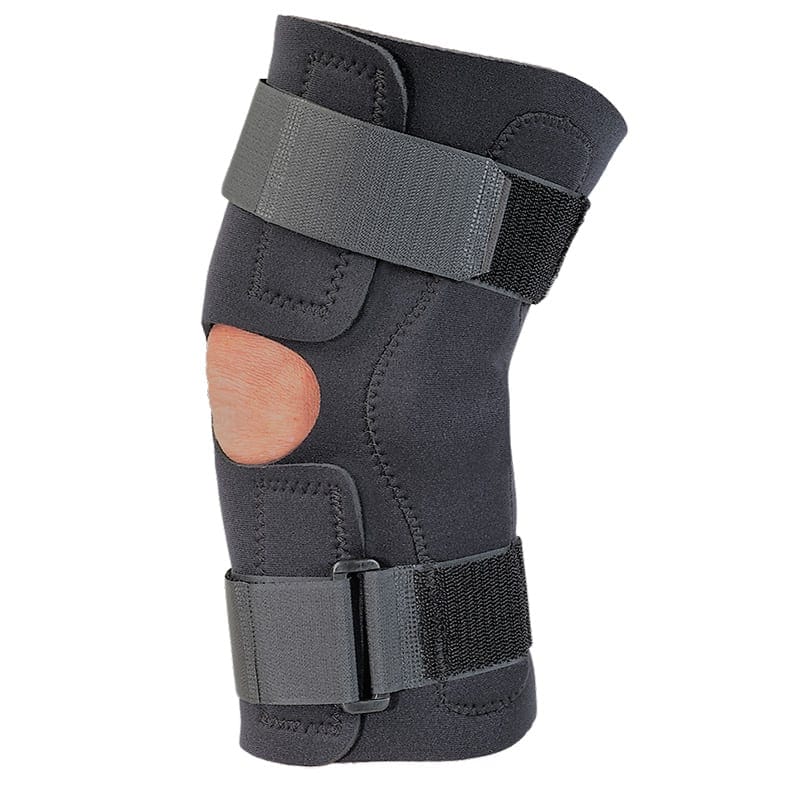
MKO Hinged Knee Wrap
In Stock
$89.99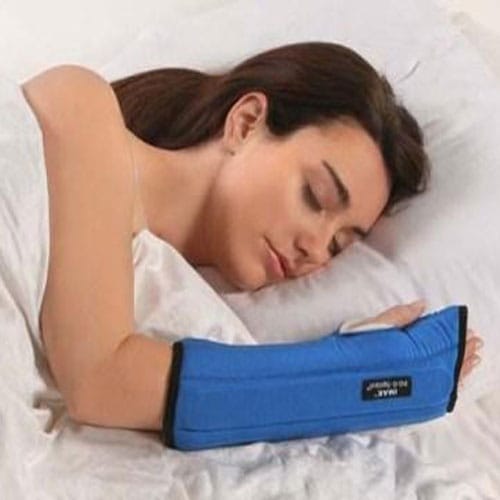
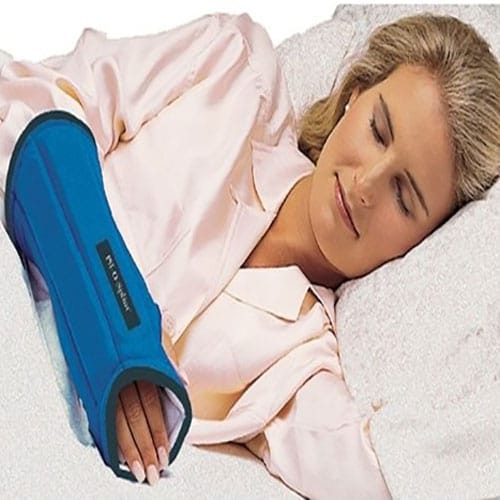
Procare Imak Pil-O-Splint – Wrist Night Splint
In Stock
$66.95
Serola Sacroiliac Belt – version 2
In Stock
$79.95
 SUPPORT SMALL CANADIAN BUSINESS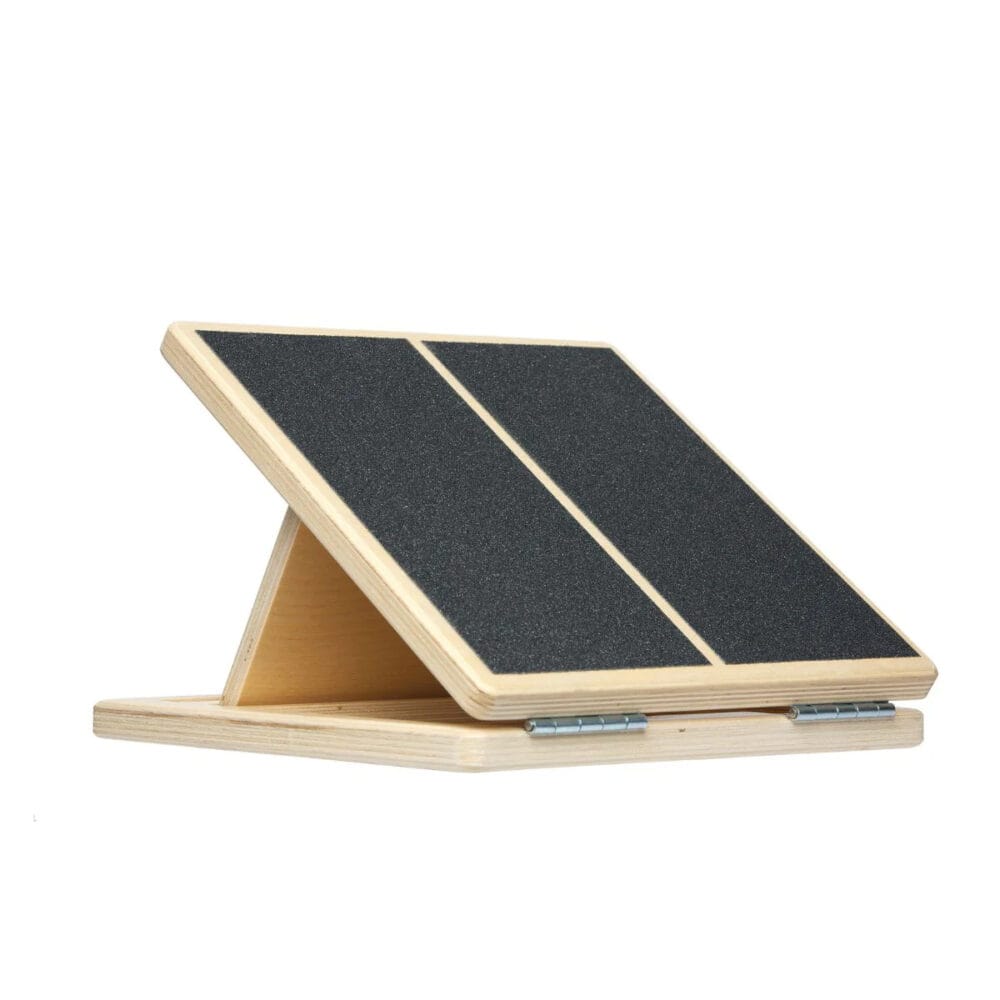


Reviews
There are no reviews yet